
Generating consistent business leads is one of the biggest challenges for companies looking to grow in a competitive market. Whether you run a small business, a service-based company, or an established brand, reaching potential customers and converting their interest into enquiries is essential for business growth.
Traditional marketing methods can still play a role, but digital marketing gives businesses more ways to connect with people who are actively searching for their products or services.
From search engine optimization and Google Ads to social media marketing and email campaigns, businesses can use different digital channels to attract relevant audiences and generate enquiries.
But simply having a website or running advertisements does not guarantee new customers. Successful lead generation requires the right strategy, clear messaging, and a process that guides potential customers towards taking action.
Let’s explore how businesses can generate quality leads with digital marketing in 2026.
What Is Lead Generation in Digital Marketing?
Lead generation is the process of attracting potential customers and encouraging them to share their contact information or enquire about your products and services.
A lead may be someone who:
- Fills out a website contact form.
- Calls your business after finding it online.
- Requests a product or service quotation.
- Downloads a guide or resource.
- Registers for a webinar or consultation.
- Sends a message through social media.
The main objective is not simply to increase website traffic. It is to attract people who have a genuine interest in what your business offers.
1. Use SEO to Attract Customers Actively Searching Online
Search engine optimization is one of the most effective ways to build long-term organic visibility and attract potential customers.
When people search for products or services on Google, they often have a specific requirement. Appearing in relevant search results allows businesses to connect with these users.
For example, a company offering plumbing services may target searches such as:
- Emergency plumber near me
- Professional plumbing services
- Residential plumbing contractor
- Affordable plumbing company
To generate leads through SEO, focus on:
- Targeting keywords with commercial and local search intent.
- Creating dedicated service pages.
- Optimizing website titles and meta descriptions.
- Publishing informative and relevant blog content.
- Improving website speed and mobile experience.
- Building relevant, high-quality backlinks.
- Optimizing your Google Business Profile.
SEO takes time, but consistent optimization can help businesses attract relevant visitors without paying for every website click.
2. Generate Immediate Enquiries Through Google Ads
Google Ads allows businesses to reach potential customers when they search for specific products or services.
Unlike many traditional advertising methods, search campaigns can target users based on the keywords they enter into Google.
For example, a digital marketing agency can target searches such as:
- Digital marketing agency near me
- SEO services for small business
- Best digital marketing company
- Professional PPC management services
To improve lead generation from Google Ads:
- Use relevant commercial-intent keywords.
- Separate campaigns according to services.
- Create compelling headlines and descriptions.
- Add call extensions and relevant sitelinks.
- Use negative keywords to reduce irrelevant clicks.
- Direct visitors to dedicated landing pages.
- Track calls, forms, and other conversions.
Monitor cost per lead and lead quality instead of focusing only on clicks and impressions.
3. Use Social Media Marketing to Build Trust and Attract Leads
Social media platforms such as Instagram, Facebook, LinkedIn, and TikTok allow businesses to connect with their target audiences and showcase their products or services.
However, posting promotional content every day is not enough. Businesses need content that answers questions, demonstrates expertise, and gives potential customers a reason to engage.
Some effective content ideas include:
- Customer testimonials and success stories.
- Before-and-after project results.
- Short educational videos.
- Frequently asked customer questions.
- Product demonstrations.
- Behind-the-scenes business content.
- Service explanations and industry tips.
Businesses can also use targeted social media advertising to reach specific audiences and direct them towards enquiry forms, WhatsApp conversations, or landing pages.
4. Create Landing Pages That Convert Visitors into Leads
Driving traffic to your website is only the first step. Your website should make it easy for visitors to contact your business.
A dedicated landing page can help convert visitors who arrive from SEO, Google Ads, or social media campaigns.
An effective landing page should include:
- A clear headline explaining the service.
- A short description of the value offered.
- Benefits relevant to the target audience.
- Customer reviews or testimonials.
- Relevant project examples.
- A simple enquiry form.
- Visible phone number or contact information.
- A strong call to action.
Avoid adding unnecessary distractions. The page should guide visitors towards one clear action, such as requesting a quote or booking a consultation.
5. Use Content Marketing to Attract and Educate Potential Customers
Content marketing helps businesses build credibility by sharing useful information with their audiences.
Many potential customers research a service before making a purchase decision. Helpful blogs, guides, videos, and case studies can answer their questions and introduce your business as a possible solution.
For example, a digital marketing company can publish articles about:
- How SEO Helps Small Businesses Generate Leads.
- Google Ads vs SEO: Which Strategy Fits Your Business Goals?
- Social Media Marketing Strategies for Local Businesses.
- Common Digital Marketing Mistakes That Waste Advertising Budgets.
- How to Improve Website Conversion Rates.
Include relevant internal links and calls to action in your content so readers can explore your services or contact your team.
6. Use Email Marketing to Nurture Potential Customers
Not every visitor is ready to purchase immediately. Some people may need additional information, time, or follow-up before making a decision.
Email marketing helps businesses maintain communication with people who have voluntarily subscribed or enquired.
You can use email campaigns to:
- Share useful industry updates.
- Send educational resources.
- Introduce new services.
- Share customer success stories.
- Follow up on genuine enquiries.
- Offer consultations or product demonstrations.
Segment your email audience according to their interests and previous interactions. Send relevant messages instead of repeatedly sending generic promotions.
7. Use LinkedIn to Generate B2B Leads
For businesses targeting other companies, LinkedIn can be a valuable channel for building professional relationships and generating business enquiries.
A B2B lead generation strategy may include:
- Optimizing your company and professional profiles.
- Sharing useful industry insights.
- Connecting with relevant decision-makers.
- Publishing case studies and project updates.
- Participating in industry discussions.
- Using targeted LinkedIn advertising where appropriate.
Personalized communication is important. Avoid sending generic sales messages to every connection.
8. Improve Lead Quality With Better Targeting
Generating hundreds of enquiries does not necessarily mean a business is growing. The quality of leads matters just as much as the quantity.
To attract more relevant prospects, businesses should clearly define their ideal customer.
Consider:
- Industry and business type.
- Geographic location.
- Customer requirements.
- Budget range.
- Services or products needed.
- Purchase intent.
For example, a company offering commercial roofing services should focus its marketing on property managers, commercial property owners, and relevant contractors rather than targeting everyone.
Clear audience targeting helps reduce irrelevant enquiries and makes marketing campaigns more focused.
9. Track Marketing Performance and Optimize Campaigns
Lead generation should be measured regularly. Without tracking, businesses may continue spending money on campaigns that generate traffic but few meaningful enquiries.
Some important performance metrics include:
| Metric | What It Measures |
|---|---|
| Website traffic | Number of visitors |
| Conversion rate | Percentage of visitors who become leads |
| Cost per lead | Average advertising or marketing cost per lead |
| Qualified leads | Enquiries matching your target customer |
| Lead-to-customer rate | Percentage of leads that become customers |
| Return on ad spend | Revenue attributed to advertising compared with ad spend |
Use Google Analytics 4, Google Search Console, advertising reports, and CRM systems to understand campaign performance.
Review the results regularly and adjust keywords, advertisements, landing pages, and targeting based on actual data.
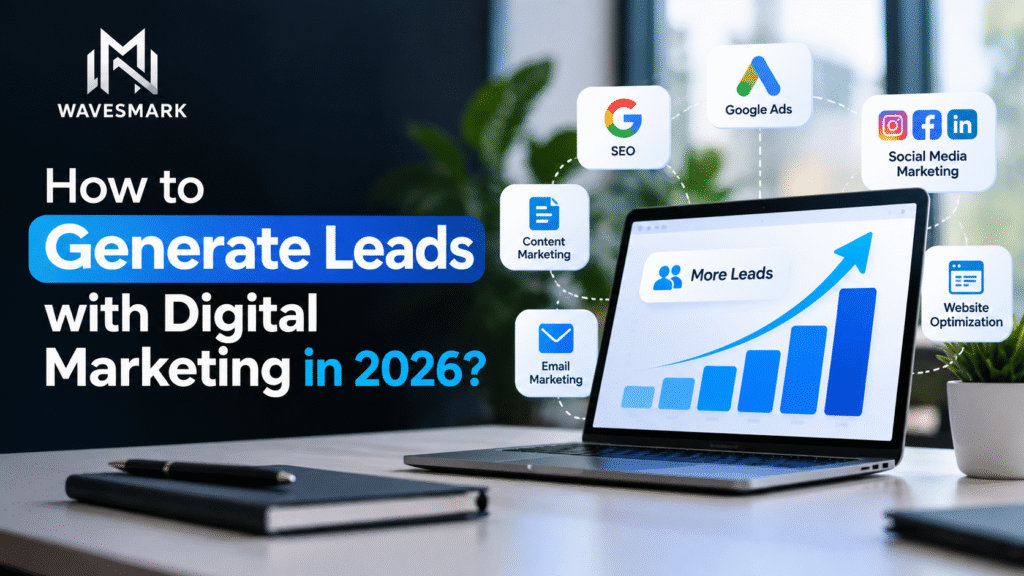
10. Combine Multiple Digital Marketing Channels
Relying on a single marketing channel can limit your ability to reach potential customers.
A combined strategy allows different channels to support each other.
For example:
- SEO attracts people searching organically.
- Google Ads reaches users with immediate service requirements.
- Social media marketing builds awareness and engagement.
- Content marketing answers customer questions.
- Email marketing nurtures existing enquiries.
- Website optimization converts visitors into leads.
The right combination depends on your business model, target audience, location, competition, and available budget.
Why Choose Wavesmark for Digital Marketing Lead Generation?
At Wavesmark, we help businesses build their online presence and reach potential customers through strategic digital marketing services.
We understand that every business has different goals. Our approach focuses on identifying relevant audiences, selecting suitable marketing channels, and improving the process of turning online visitors into genuine business enquiries.
Our services include:
SEO Services: Improve organic search visibility and attract relevant website traffic.
Social Media Marketing: Build brand awareness, audience engagement, and opportunities for customer enquiries.
Google Ads and PPC: Reach potential customers through targeted paid advertising campaigns.
Website Development: Create professional, user-friendly websites designed to support business objectives and conversions.
App Store Optimization: Improve app discoverability and visibility in app stores.
Online Reputation Management: Support your brand’s online reputation and credibility.
Whether you are a startup or an established company, we can help you develop a digital marketing strategy aligned with your business requirements.
Final Thoughts
Generating leads with digital marketing is not about using every available platform. It is about understanding your target audience, choosing the right channels, creating relevant content, and providing a clear path for potential customers to contact your business.
SEO, Google Ads, social media marketing, content creation, email campaigns, and conversion-focused websites can work together to create a consistent lead generation process.
Start by identifying your business goals, understanding where your customers spend their time, and tracking the results of every marketing activity.
Looking to generate more business enquiries?
Connect with Wavesmark to explore digital marketing services designed to help your business improve online visibility and reach potential customers.
Website: https://wavesmark.com/